


Our story
We are a multidisciplinary research-action and teaching group at the USC, where land-use planning and territorial transition serve as the strategic axis that organizes and gives purpose to our collective work.
Our mission is to contribute to more sustainable and cohesive territories, aware of current and future challenges. This approach commits us to integrating environmental, social, and economic dimensions within a coherent framework for territorial transformation. This transformation is oriented towards the well-being and resilience of communities and ecosystems, with a particular focus on agricultural activities.
Our current research areas are:
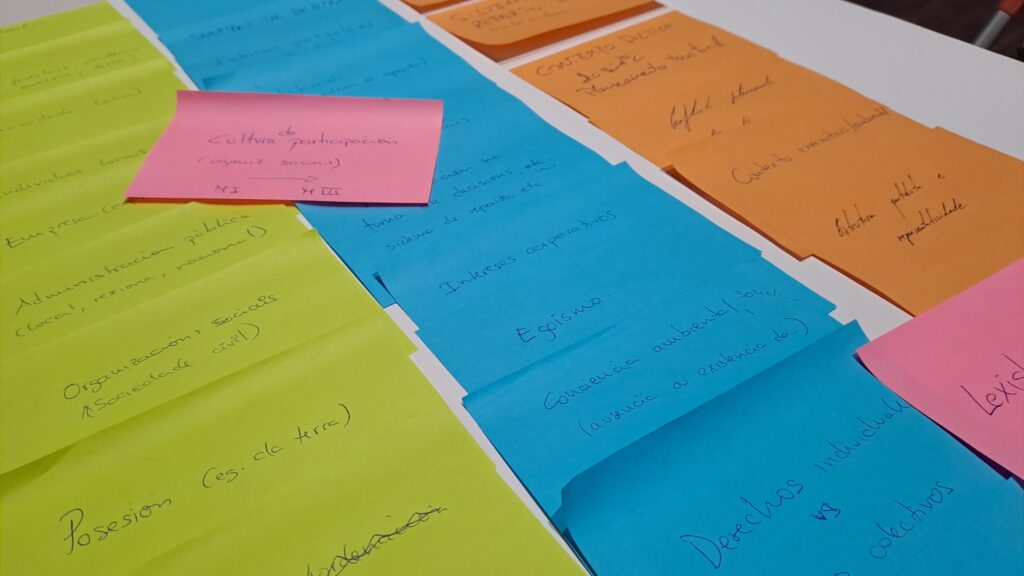
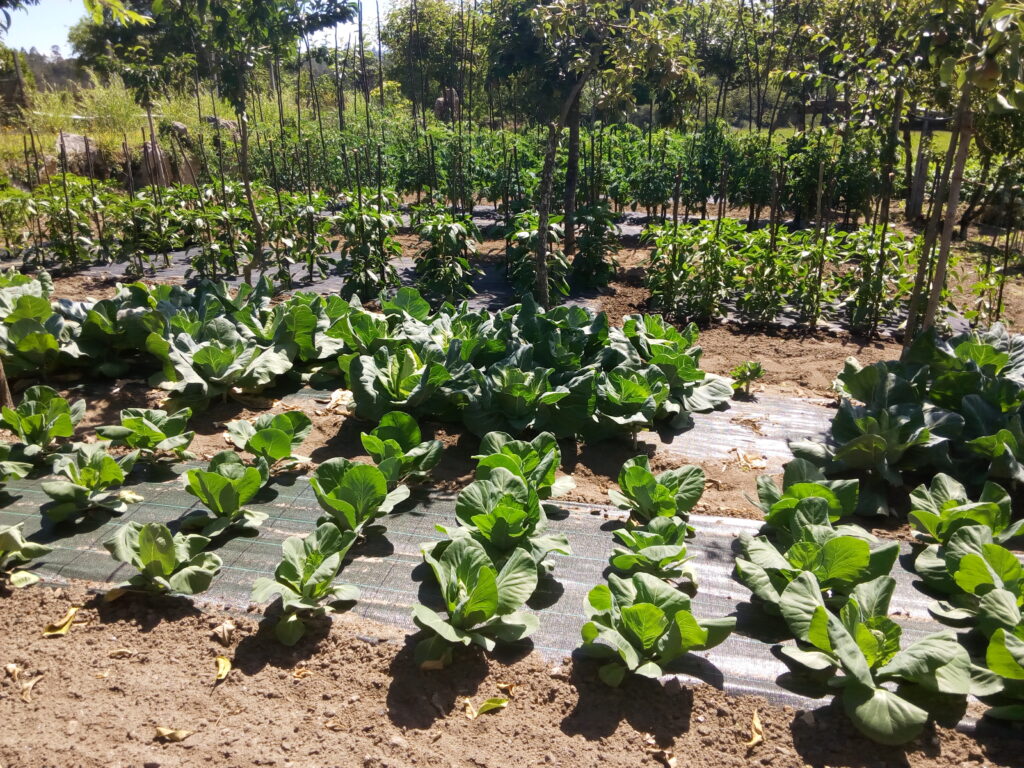
On the research side, some members of the group are also part of the Institute of Agricultural Biodiversity and Rural Development (IBADER), while others belong to the Center of Research Interuniversity Landscapes Atlantic Cultural (CISPAC). Participation in the latter fosters collaboration with researchers from the social sciences and humanities—particularly in applied economics, economic history, and contemporary history. This collaboration is also reflected in the group’s recent projects and publications, which showcase a strong interdisciplinary approach.
Trayectory
After beginning its activity in 1995 under the name “Laboratory of Projects and Planning,” the research team led by Prof. Rafael Crecente Maseda evolved into the Land Lab (LaboraTe), integrating—with a horizontal vision—six research, teaching, and innovation lines that shaped much of its work. These were:
- Spatial planning
- Rural development
- Land tenure and territorial management
- Landscape Ecology and Landscape Planning
- Geographic Information Systems (GIS), photogrammetry, and remote sensing
- Cooperation for Development
In 2000, the Laand lab and the Biodiversity Laboratory of the Lugo Campus merged, giving rise to the USC research group “Territory and Biodiversity”. Together, the group focuses its work on territorial management, with particular attention to rural areas and natural landscapes. Since its inception, the use of geospatial technologies has been one of its defining features.
In 2013, the Land Lab faced its greatest crisis with the loss of its founder, Prof. Rafael Crecente. From that moment on, the coordination of the group was assumed by Prof. David Miranda.
Even so, Rafael Crecente and his legacy remain present in the group, not only thematically. After several tributes promoted by the Land Lab in collaboration with IBADER, the “Rafael Crecente Awards for Innovative proposals on territorial management” were established in 2017. Held annually, these Awards target young graduates and aim to promote the development and practical application of innovative ideas related to rural development, environmental conservation, or the improvement of territorial management in a broad sense within Galicia.
Rafael Crecente
“What should we do with the land we have?” With this seemingly simple question, Rafael Crecente left a lasting mark on a wide community of researchers, professionals, and public decision-makers. More than a question, it was an invitation to think, to commit, and to act. Rafa’s mission was to build bridges—between scientific fields, and between research and action. He understood territory as something living and complex, something that can only be understood and improved through an open and integrative perspective. As he used to say, advancing knowledge requires “integration and transcendence”: going beyond established boundaries, blending ways of knowing, and opening new paths.
From the Land Lab, Rafa championed a holistic vision and a transdisciplinary practice of territorial management. His way of working was a constant invitation to broaden horizons, to listen to other voices, and to bring in new perspectives.
‘In nature, hybrid species are usually sterile, but in science the reverse is often true. Hybrid subjects are often astonishingly fertile, whereas if the scientific discipline remains too pure it usually wilts.’ (Francis Crick, 1988, What Mad Pursuit).
This quote, which Rafa chose to place at the top of the Land Lab website, perfectly sums up his thinking: innovation emerges from encounter, from blending, and from collaboration. That spirit remains alive today within the Land Lab, forming an essential part of its DNA