


Participatory action research
Participatory action research is one of the fundamental pillars of LaboraTe, defined as a cross-cutting element and a general methodological principle that guides much of our activity.
Our approach avoids extractive knowledge dynamics, opting instead for research that acts as an engine for change and is therefore rooted in the territory and connected to the people who inhabit it. This approach is operationalised through several key points:
- Social and territorial transformation: The goal goes beyond theoretical analysis to generate projects with a real and transformative impact on rural areas, helping to shift political and institutional inertia.
2. Co-creation and facilitation: The group stands out for its long experience in organising workshops and participatory processes to accelerate innovation in rural areas or in the joint design of public policies. To integrate multiple perspectives, a wide range of tools is used, from classical facilitation techniques to innovative and technological methodologies such as PPGIS (Participatory Geographic Information Systems).
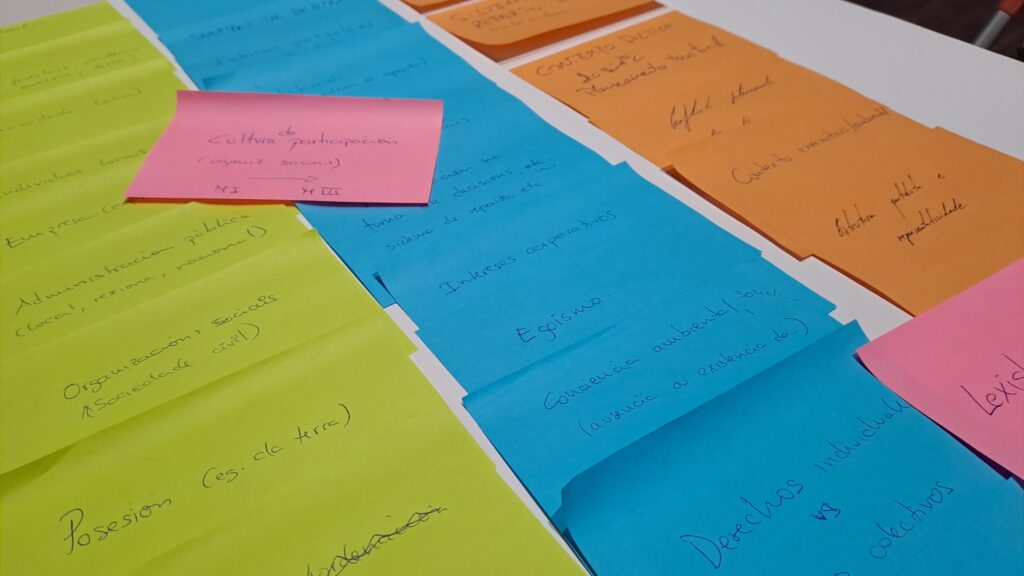
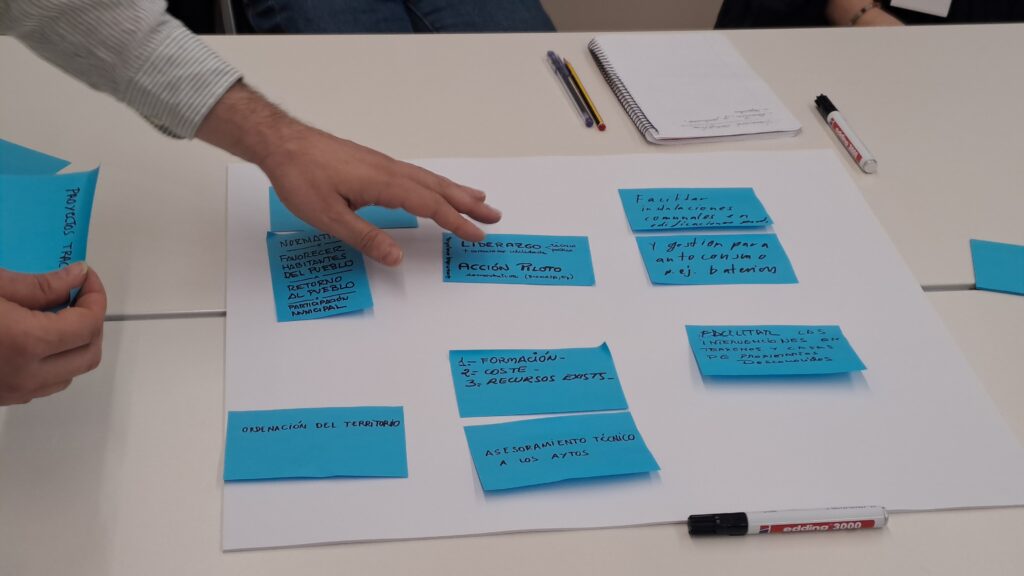
3. Support for local actors: An essential part of our work is supporting territorial actors so that they themselves lead key processes, such as the mobilisation of abandoned land. At the same time, we learn from one another, generating new shared pathways.
4. Citizen science and dialogue: We promote respect for community knowledge and the active participation of citizens in monitoring and managing their environment. Although “citizen science” may seem like a new concept, the group has been advocating for multi-actor processes and co-creation for more than 20 years, drawing on its solid trajectory and experience in participation.
In summary, participatory action research at the Land Lab is understood as a bridge between academia and social reality, where research is conceived as a tool for transformation in the service of collective well-being and the sustainability of the rural territory.