


On April 29th, the Ladairo Winery (Oímbra) hosted the presentation of the GREENSEED project. This initiative seeks to reinforce the cross-border ecosystem supporting bioeconomy entrepreneurship, particularly in the agricultural sector, through cooperation between Galicia and Northern Portugal.
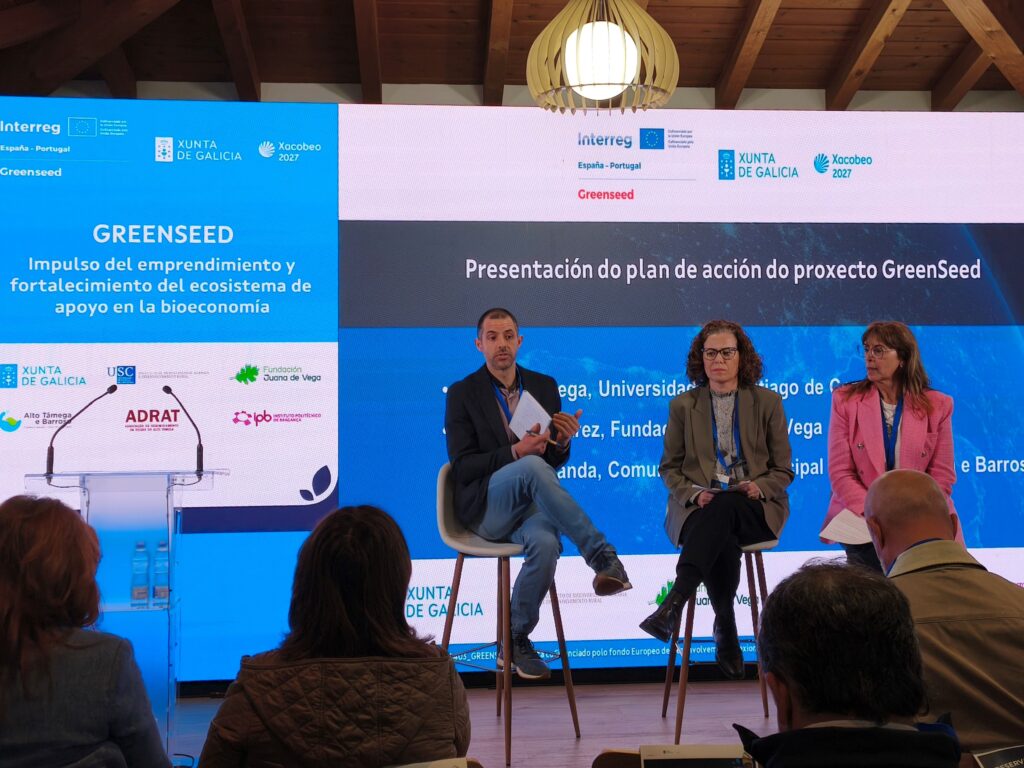
GREENSEED will promote Territorial Bioeconomy Entrepreneurship Support Ecosystems (ETEB) in four pilot regions—two on each side of the border. These will function as collaborative networks comprising public and private advisory services, R&D centers and universities, producer associations, and trade unions, among others.
As a starting point, the Land Lab will lead the analysis of strategic bioeconomy sectors for Galicia and Northern Portugal. For each sector, the study will specifically address everything from global trends and opportunities to the most critical barriers to entry, such as access to land or bureaucratic complexity.
The objective is to design a governance model that ensures anyone wishing to venture into the agricultural sector and other bioeconomy areas—especially youth and women in rural areas—has the necessary guidance to overcome a lack of capital or technical knowledge.
To ensure that all generated knowledge is accessible and useful, the project will launch DataTerra, a dynamic, open-access digital platform featuring the following tools:
- Web-GIS Viewer: interactive maps with key territorial resources.
- Expert Knowledge Bank (BdCE).
- Cross-border Virtual Academy.
- Best Practices Repository, as well as a catalog of solutions and “demonstration pills” where entrepreneurs themselves will share their success stories.
The Land Lab is part of the consortium for this cross-border project, which is led by the Consellería de Emprego, Comercio e Emigración and funded under the Interreg Spain-Portugal (POCTEP) program. The consortium also includes the Juana de Vega Foundation, the Comunidade Intermunicipal do Alto Tâmega e Barroso (CIMAT), the Associação de Desenvolvimento da Região do Alto Tâmega (ADRAT), and the Polytechnic Institute of Bragança (IPB).